11+ Maths Tuition · Smethwick

11+ Maths Tuition in Smethwick. Every mark counts.

The 11+ maths paper rewards speed and accuracy under strict time pressure — not just knowing the content. Kevin Johal, a qualified secondary maths teacher, builds both in sessions that go beyond what school covers.

  • Qualified secondary maths teacher. Kevin holds QTS and teaches up to GCSE — the 11+ maths paper holds no surprises for him.
  • GL Assessment format every session. Timed practice in the exact question style Birmingham grammar schools use.
  • From £15/hour. Free first lesson so you can see the approach before committing.
  • Year 4 to Year 6. We adapt the content and pace to where your child actually is, not where they should be.
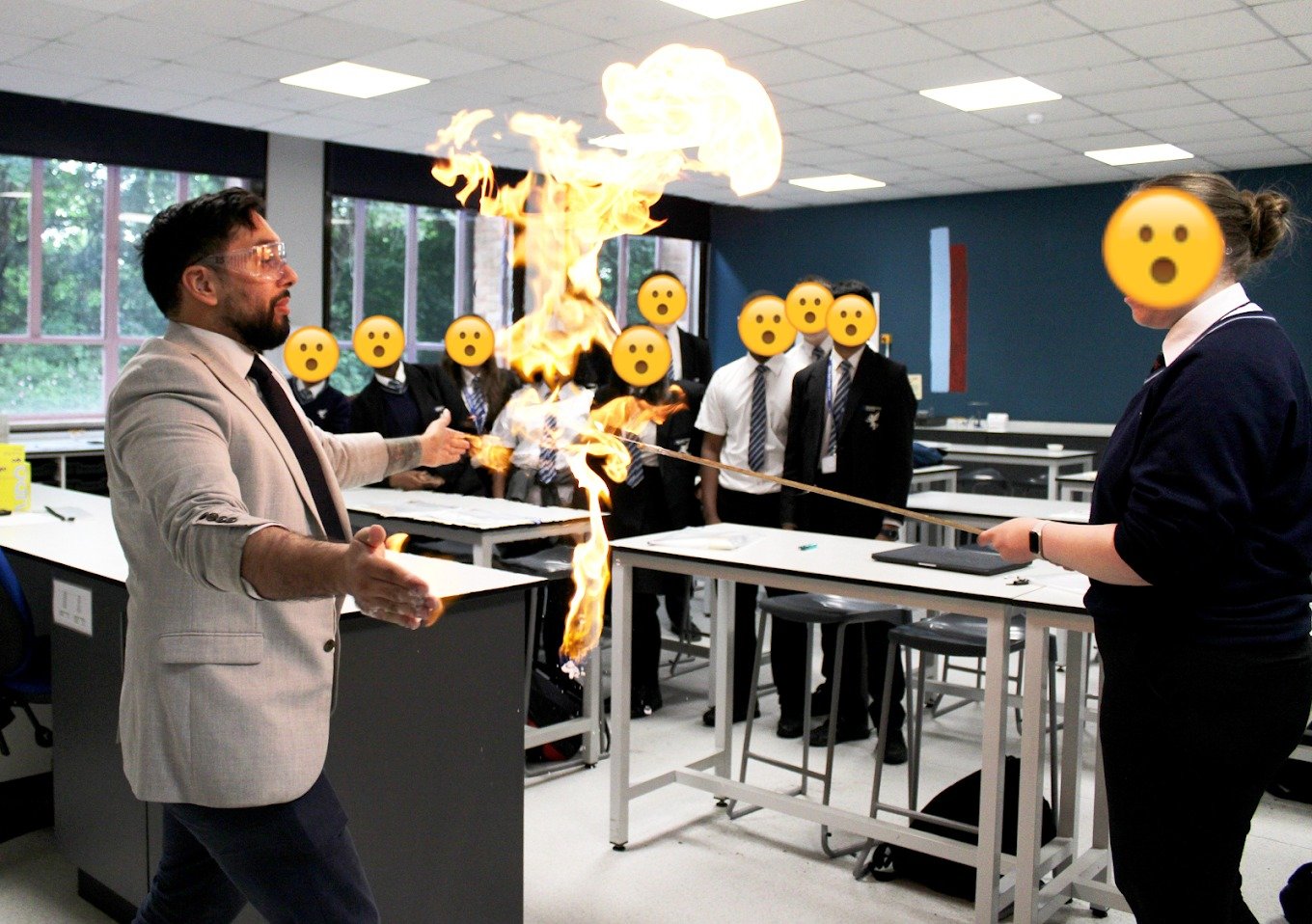
Kevin Johal teaching 11+ maths in Smethwick
Kevin Johal
Kevin Johal · Qualified Secondary Maths Teacher Covers 11+ maths and non-verbal reasoning. QTS qualified.

What sessions cover

  • All four GL Assessment maths topic areas
  • Multi-step problem-solving strategies
  • Timed paper practice with error analysis
  • Mental arithmetic speed drills
📐 Arithmetic
📊 Data handling
📐 Shape & measure
🔢 Fractions & %
🧩 Problem-solving
⏱ Timed practice
The GL Assessment Maths Paper

What the 11+ maths paper actually tests.

Birmingham grammar schools use the GL Assessment. The maths paper runs for 50 minutes and covers around 45–50 questions, all multiple-choice. Content draws from Years 3–6 of the primary curriculum, but the questions are presented in ways that require flexible thinking — not just recall of a method taught in class.

Number & Arithmetic

  • Place value up to millions
  • Addition, subtraction, multiplication, division
  • Factors, multiples, primes and squares
  • Mental calculation under time pressure
  • Negative numbers and number lines

Fractions, Decimals & Percentages

  • Equivalent fractions and simplifying
  • Adding and subtracting fractions
  • Converting between fractions, decimals and %
  • Finding a percentage of an amount
  • Ratio and proportion problems

Problem-Solving & Algebra

  • Multi-step word problems
  • Simple algebraic expressions and sequences
  • Number puzzles and logic questions
  • Missing number problems
  • Working backwards from answers

Shape & Measurement

  • Perimeter and area of standard shapes
  • Volume of cuboids
  • Angles in triangles and on straight lines
  • Coordinates in four quadrants
  • Units of measurement and conversion

Data Handling

  • Reading bar charts, pie charts and line graphs
  • Tables and two-way tables
  • Mean, median, mode and range
  • Probability (basic)
  • Interpreting data under time pressure

Exam Technique

  • 50-minute timed practice papers
  • Elimination strategies on multiple-choice
  • Checking answers with estimation
  • Managing time across question types
  • Avoiding common multiple-choice traps
Common Mistakes

Where children lose marks — and how to stop it.

After working through hundreds of 11+ maths papers with Smethwick and Birmingham children, the same errors come up repeatedly. Most are fixable with targeted practice once you know what to look for.

Mistake 1

Reading past the actual question

Multi-step word problems give information in stages. Many children calculate the first thing they can calculate — not what is actually being asked. We practise circling the question before touching any numbers.

Mistake 2

Spending too long on hard questions

The multiple-choice format means one tricky question costs the same mark as an easy one. Children who stall lose three marks while an equally capable child moves on and gains them elsewhere. Pacing is a learnable skill.

Mistake 3

Fraction arithmetic errors

Adding fractions by adding numerators and denominators separately is one of the most common — and most penalised — errors in the paper. We rebuild this from scratch until it is automatic, not effortful.

Mistake 4

Mental arithmetic that slows down

Children who rely on written column methods for every calculation cannot finish the paper in 50 minutes. We build mental arithmetic speed through regular timed drills — multiplication facts, division, doubling and halving.

Mistake 5

Misreading data in charts and tables

Data questions often have axes with non-standard scales or intervals that are not whole numbers. Children who rush misread the scale and calculate from the wrong value. We teach a systematic axis-check habit before any calculation.

Mistake 6

Getting caught by distractor answers

GL Assessment papers include wrong answers that are specifically designed to match common mistakes — e.g. the answer you get if you forget to convert units. We teach children to estimate first so they can spot when an answer looks wrong.

How Sessions Work

A typical 11+ maths session with Kevin.

Every session is one-to-one and structured around what your child actually needs — not a fixed syllabus delivered at one pace. Kevin diagnoses gaps in the first session and builds a working plan from there.

1

Warm-up drill (10 min)

Timed mental arithmetic — multiplication tables, fraction conversions, quick division. Not to test, but to build speed. These drills become second nature over weeks of regular practice.

2

Topic teaching or review (20 min)

Kevin works through the current focus area — whether that is fractions, ratio, shape or data — using the exact question styles and phrasing that appear in GL Assessment papers. No generic textbook explanations.

3

Timed practice section (20 min)

A section of a full past paper or question set, completed under timed conditions. Kevin marks it immediately, then they go through every error together so your child understands exactly why each wrong answer was wrong.

Timing

When to start 11+ maths preparation.

The earlier children start, the more time there is to close gaps without pressure. Here is what we typically work on by year group.

Year 4 Foundations first

Times tables to 12, long multiplication, short division, place value, basic fractions and equivalent fractions. Getting these automatic means Year 5 can focus on harder content.

Year 5 Build up to exam content

Fractions, decimals and percentages in full. Ratio and proportion. Area, perimeter, volume. First timed practice papers. This is the most productive year to invest in tuition.

Year 6 Exam focus and technique

Full timed papers every session. Targeted work on weak sections. Pacing strategies. Mock test in the full Birmingham 11+ format. Final polish in the weeks before September.

FAQ

Common questions about 11+ maths tuition.

How is the 11+ maths paper different from school maths?

It is entirely multiple-choice and must be completed in 50 minutes. Speed and accuracy matter far more than in a school test. The content goes up to Year 6 level but tests it in unfamiliar contexts requiring flexible thinking, not just recall of a method.

What maths topics appear in the GL Assessment paper?

Number and place value, the four operations, fractions, decimals and percentages, ratio and proportion, simple algebra, shape and measurement, and data handling including tables and charts. Problems are often multi-step — children need to identify what is being asked before calculating.

When should my child start 11+ maths preparation?

Ideally in Year 4 or early Year 5. This gives time to consolidate core number skills before moving to timed practice. Children starting in Year 6 can still make significant progress but sessions need to focus immediately on technique alongside content gaps.

Does Kevin cover non-verbal reasoning as well as maths?

Yes. As a qualified secondary maths teacher, Kevin covers both the maths and non-verbal reasoning papers, which share a strong overlap in spatial and pattern-recognition thinking. English and verbal reasoning are covered by Serena Johal, qualified primary teacher.
Free trial lesson. No commitment.

Book a free first lesson to see Kevin's approach before committing. Sessions from £15/hr. Call 07909 274901 or follow one of the links below.